
As winter settles in and the evenings turn cold and windy, the body craves something warm, sweet and comforting. Gajar ka halwa is the classic winter favourite, but this ghee-rich moong dal halwa recipe deserves an equal place on the festive table. Ghee moong dal halwa is one of the finest winter mithais in the Indian kitchen. Let us explore this timeless recipe.
Moong Dal Halwa Is More Than a Dessert
India has a wide range of desserts, yet moong dal halwa holds a special place among them. It is loved for its richness, distinctive flavour and nostalgic warmth. Making it is not like preparing an ordinary sweet. It rewards patience, and the slow roasting of the dal over a medium flame is what builds its deep, delicious taste. Its granular texture, aromatic ghee and melt-in-the-mouth consistency make it one of India’s best-loved traditional desserts.
Did You Know? The Origin of Moong Dal Halwa
According to popular accounts, moong dal halwa originated in Rajasthan and later spread across northern India. Moong dal and desi ghee are staples in most Indian homes, so the ingredients are always close at hand. The word “halwa” itself is not of Indian origin. It comes from the Arabic word hulw, meaning “sweet”. In northern India, the dish is traditionally made in winter because its ghee and protein are believed to keep the body warm. Without further delay, here is how to prepare moong dal halwa at home.
Ingredients
Serves 4 to 5 | Preparation time: 4 to 5 hours of soaking | Cooking time: about 50 to 60 minutes
- 1 cup (about 200 g) yellow moong dal, soaked and ground
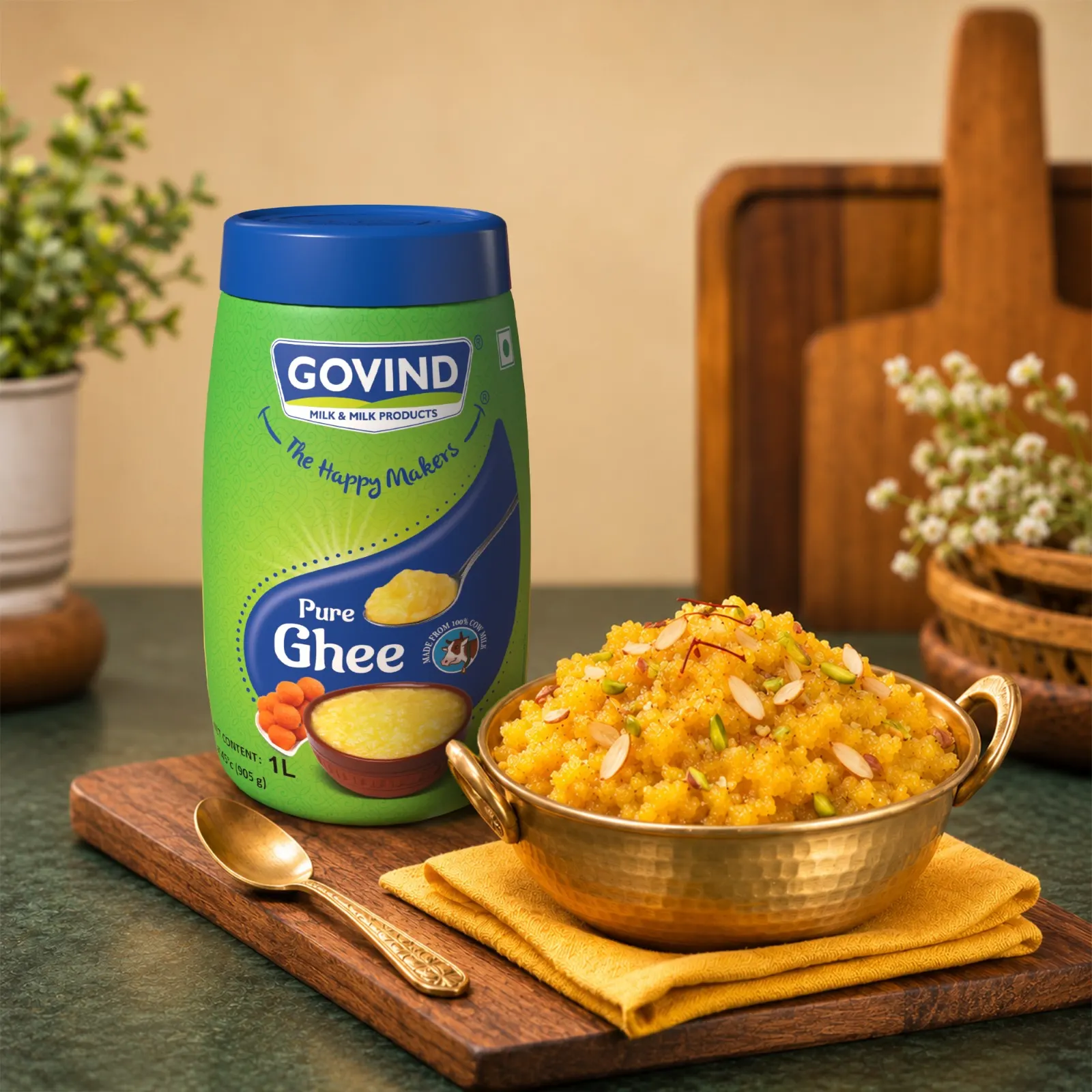
- ¾ cup (about 150 g) Govind Pure Ghee, plus extra if needed
- ¾ cup (about 150 g) sugar
- 1 cup Govind full-cream milk
- 1 cup hot water
- ½ teaspoon cardamom powder
- 10 to 12 saffron strands
- 2 tablespoons each of chopped almonds, cashews and pistachios
- ¼ cup (about 50 g) khoya (optional)
Method: Recipe for Moong Dal Halwa
- Soak the moong dal for 4 to 5 hours, drain it and grind it into a coarse paste.
- Heat a heavy-bottomed pan or kadhai well and add 1 tablespoon of Govind Pure Ghee.
- Add the dal paste and cook on a low flame. Stir continuously and roast for 30 to 40 minutes, adding the remaining ghee a little at a time as needed.
- Look for these signs that the dal is properly roasted:
- The colour turns golden brown.
- The ghee begins to separate.
- The aroma becomes rich and nutty.
- Slowly add the Govind full-cream milk and hot water, stirring carefully as the mixture may splutter. Cook until the liquid is fully absorbed.
- Add the sugar and mix well. The halwa will loosen at first and then thicken again.
- Finish with the cardamom powder, saffron, dry fruits and khoya (if using), and cook until the halwa turns glossy.
Your winter-special moong dal halwa is now ready to serve.
Why Ghee Matters in Moong Dal Halwa
No halwa is complete without ghee. It is the backbone of any good ghee moong dal halwa. Ghee regulates the heat during roasting, prevents clumping, develops a nutty aroma and creates a rich, melt-in-the-mouth texture. It also binds the ingredients together. Without enough ghee, halwa turns pasty and dry.
The taste of the halwa depends on the quality of the ghee. Poor-quality ghee spoils the flavour and may not be good for your health, so quality should be your first consideration when buying it. Good ghee should be pure, granular and golden. Govind Pure Ghee is made from pure cow’s milk, and every batch is quality tested, free from chemicals and made without artificial colour. For a moong dal halwa with authentic aroma and flavour, Govind Pure Ghee is the essential ingredient.